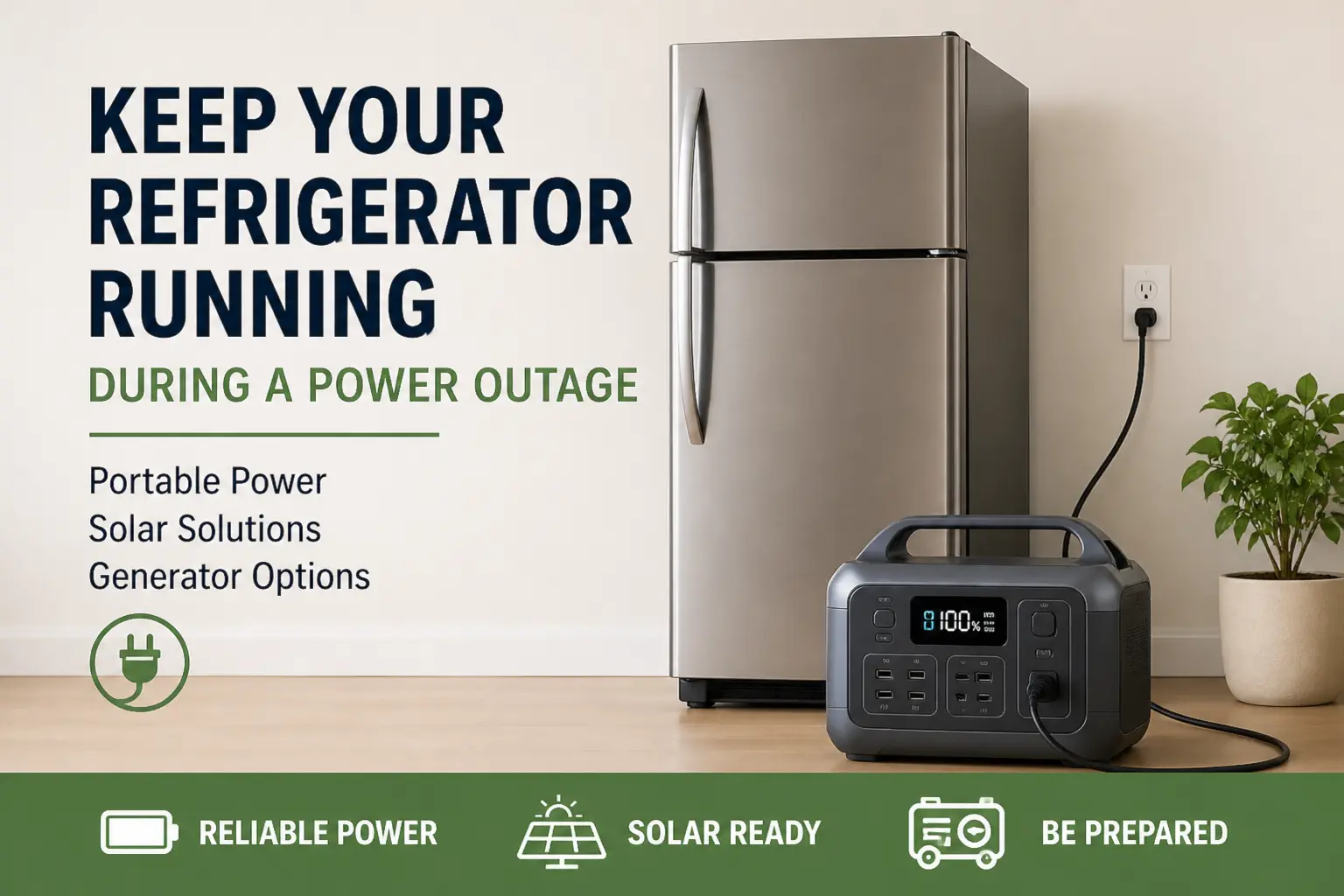
How to Keep a Refrigerator Running During a Power Outage
When the power goes out, one of the first questions many families ask is simple: How do you keep a refrigerator running during a power outage?
We live in the Hampton Roads area of Coastal Virginia, where outages can happen from hurricanes, flooding, nor’easters, severe thunderstorms, and occasional grid disruptions. Because of that, protecting refrigerated food, medicine, and daily routines is one of the first preparedness priorities many local families think about.
A refrigerator is often one of the most important appliances to keep running during an outage. Losing groceries can be expensive, and spoiled food adds stress during an already difficult situation.
The good news: many households do not need a whole-house generator to protect a refrigerator. A properly sized portable power station, solar generator, battery backup setup, or fuel generator can often do the job depending on outage length and budget.
If you are new to emergency power planning, start with our Backup Power Basics / Start Here Guide. If you are comparing battery systems specifically, read Portable Power Stations for Beginners after this guide.
Quick Answer: Most refrigerators use around 100 to 400 running watts, but startup surge can briefly require 600 to 1800+ watts depending on model and age. For many homes, the best solution is a 1000W+ pure sine wave portable power station or properly sized generator.
Who This Guide Is For (and Who It’s Not)
This guide is for you if:
- You want to keep food cold during outages
- You live in a storm-prone or outage-prone area
- You are comparing generators vs battery backup
- You want a practical refrigerator emergency plan
- You prefer preparing before the next storm season
This guide may not be for you if:
- You only need phone charging and lights
- You need full-home HVAC backup
- You want standby generator installation advice only
For larger systems, see our upcoming Whole-Home Backup Options Guide.
Why Refrigerator Backup Power Matters
Your refrigerator is usually one of the top-priority appliances during a blackout.
Without power:
- Food temperatures rise quickly
- Meat and dairy may spoil
- Replacing groceries can cost hundreds
- Some medications may need refrigeration
- Stress increases during long outages
According to the U.S. Food and Drug Administration, refrigerators should stay at 40°F or below, and an unopened refrigerator generally keeps food safe for about 4 hours.
That means keeping the door closed matters almost as much as backup power itself.
🎥 Real-World Test: Can a Power Station Actually Run a Refrigerator?
Want to see what this looks like in a real outage situation? This test shows how long a battery system can actually keep a refrigerator running without power.
How Much Power Does a Refrigerator Need?
Every refrigerator is different, but these ranges are common:
| Refrigerator Type | Running Watts | Startup Surge |
|---|---|---|
| Mini fridge | 50 to 100W | 150 to 300W |
| Apartment fridge | 75 to 150W | 300 to 600W |
| Standard kitchen fridge | 100 to 250W | 600 to 1200W |
| Large modern fridge | 150 to 400W | 1000 to 1800W |
| Older / inefficient models | 250 to 500W+ | 1500W+ |
Typical Daily Energy Use
Many modern refrigerators use roughly 1 to 2 kWh per day, while older or less efficient models may use more. Energy Star appliances often use less electricity than older units.
What These Numbers Mean
- Running watts = the normal power used once the refrigerator is operating
- Startup surge = the short burst of extra power needed when the compressor kicks on
- Battery size (Wh) = how long your backup power lasts
- Inverter watts = must be high enough to handle startup surge
A common mistake is buying a battery system with enough storage, but not enough inverter power to start the refrigerator.
Real appliance labels are more accurate than generic averages.
Check Your Actual Refrigerator Label
For the best estimate, check:
- Manufacturer label inside the fridge
- Rear compressor sticker
- Owner’s manual
- EnergyGuide label
- Plug-in watt meter
If you want a more exact estimate, read How Many Watts Does a Refrigerator Use?
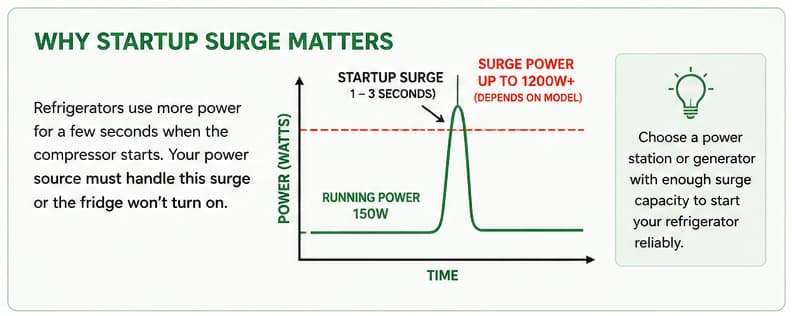
Why Refrigerators Need More Power Than Expected
Many people only look at running watts, but refrigerators also need extra power when the compressor starts.
Typical power profile:
| Power Type | Typical Range |
|---|---|
| Running watts | 100 to 250W |
| Startup surge | 600 to 1800W+ |
| Daily energy use | 1 to 2+ kWh |
A battery may have enough stored energy but still fail to run the fridge if the inverter cannot handle startup surge.
That is why inverter size matters just as much as battery size.
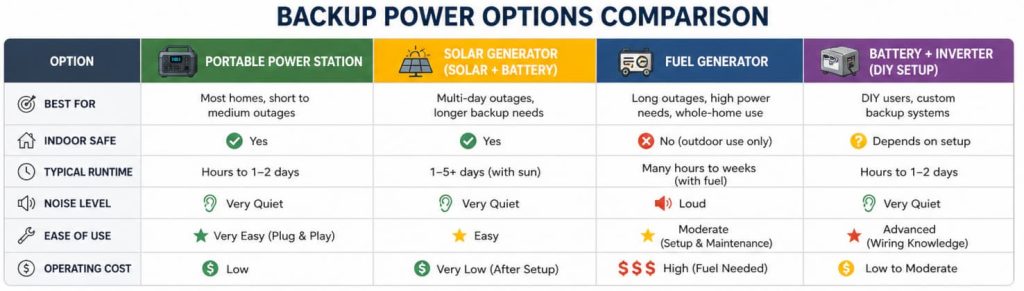
Best Ways to Keep a Refrigerator Running During a Power Outage
1. Portable Power Station (Best for Most Homes)
For many households, this is the easiest modern solution.
Benefits:
- Indoor safe
- No gasoline fumes
- Quiet operation
- Plug-and-play simplicity
- Recharge from wall outlet, car, or solar panel
Recommended minimum for many refrigerators:
- 1000W inverter output
- Pure sine wave inverter
- Strong surge rating
- 1000Wh to 2000Wh battery capacity
Typical Runtime
| Battery Size | Possible Runtime* |
|---|---|
| 500Wh | 3 to 6 hours |
| 1000Wh | 8 to 16 hours |
| 2000Wh | 20 to 30 hours |
| 3000Wh+ | 30 to 48+ hours |
*Actual results vary significantly.
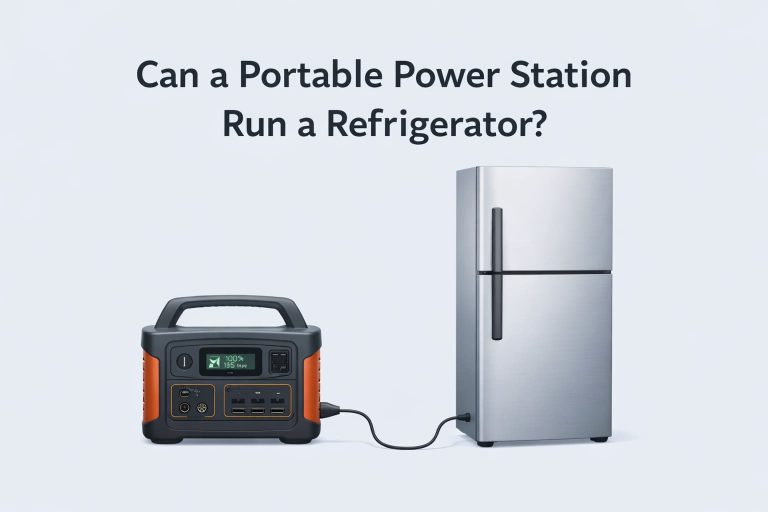
Read next: Can a Portable Power Station Run a Refrigerator?
Also see: Portable Power Stations for Beginners

2. Solar Generator Setup (Best for Multi-Day Outages)
A solar generator usually means a battery power station paired with solar panels.
Best for:
- Multi-day outages
- Hurricane season planning
- Lower fuel dependence
- Emergency resilience
Example Setup
- 2000Wh battery system
- 400W solar panels
- Refrigerator connected to AC outlet
In sunny conditions, solar charging can significantly extend runtime.
Read next: Solar Generators for Home Backup
3. Fuel Generator (Best for Long Runtime)
Traditional generators remain practical for longer outages.
Benefits:
- Strong output
- Can power refrigerator + freezer + more
- Long runtime if fuel is available
Safety reminders:
- Never run indoors
- Keep away from doors and windows
- Follow spacing instructions
- Use outdoor-rated cords
The U.S. Consumer Product Safety Commission warns portable generators can create deadly carbon monoxide if misused.
4. Battery + Inverter DIY Setup
Some households use batteries with standalone inverters.
This can work well, but requires:
- Correct wiring
- Fuse protection
- Surge planning
- Safe charging practices
- More technical knowledge
For beginners, all-in-one portable power stations are usually simpler.
What Size Backup Power System Do You Need?
| Use Case | Recommended Size |
|---|---|
| Mini fridge | 500 to 1000Wh |
| Standard refrigerator overnight | 1000 to 2000Wh |
| Refrigerator about 1 day | 2000Wh+ |
| Refrigerator + freezer | 2000 to 3000Wh+ |
| Multi-day outages | Solar generator system |
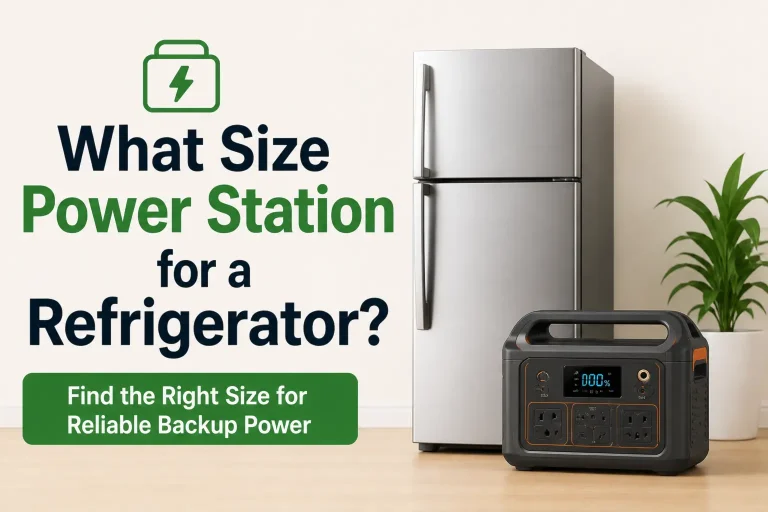
Read next: How to Choose the Right Portable Power Station Size
Can You Run a Refrigerator and Freezer Together?
Yes, but account for combined power draw.
| Appliance | Typical Running Watts |
|---|---|
| Refrigerator | 150 to 250W |
| Freezer | 150 to 300W |
If both run together, many homes need:
- 400 to 600W running capacity
- 1500 to 2500W surge capacity
That is why many people choose 2000Wh+ systems when powering both.
What We Personally Do in Hampton Roads
Because we live in Hampton Roads and understand local outage risks, our own refrigerator backup plan focuses on practical solutions that are ready before storm season.
We prioritize:
- Properly sized portable power station
- Enough surge capacity for refrigerator startup
- Frozen water bottles before storms
- Backup cooler for drinks and snacks
- Refrigerator thermometer
- Phones and flashlights charged
- Optional solar charging for longer outages
That type of setup can handle many short to medium outages quietly and with less hassle than fuel storage.
How to Keep Food Cold Longer Without Power
Even if backup power is limited, these steps help:
Keep the Door Closed
Every opening releases cold air.
Freeze Water Bottles Ahead of Storms
Extra thermal mass helps maintain temperature.
Move Drinks to a Cooler
Reduces unnecessary refrigerator openings.
Lower Refrigerator Temperature Before a Storm
If an outage is likely, pre-cool safely beforehand.
Group Food Together
Dense cold items hold temperature longer.
How Long Food Stays Safe During an Outage
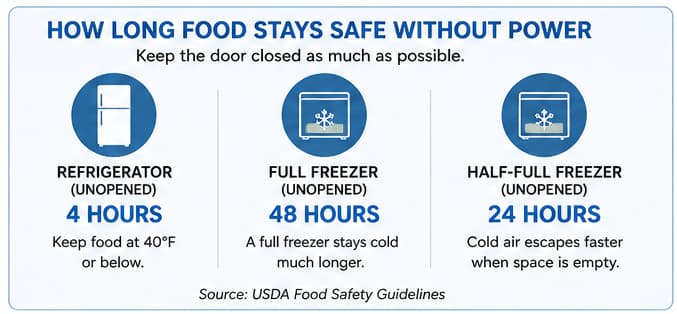
According to the U.S. Department of Agriculture:
- Refrigerator: about 4 hours unopened
- Full freezer: about 48 hours unopened
- Half-full freezer: about 24 hours unopened
Food above 40°F may spoil quickly.
What About Chest Freezers?
Chest freezers often stay cold longer than refrigerators when unopened because cold air does not spill out as easily.
If you store bulk meat or frozen food, freezer backup power may be an equal or higher priority.
Extension Cord Safety Tips
If using a generator:
- Use heavy-duty cords
- 12-gauge cords are often preferred for higher loads
- Keep cords as short as practical
- Avoid thin bargain cords
- Inspect cords before use
If You Store Medicine
If you keep insulin or other temperature-sensitive medicine refrigerated, verify storage guidance with your pharmacist or manufacturer.
Medical needs may make refrigerator backup power more urgent.
Quick Decision Guide
If your outages are usually:
- Under 8 hours: Portable power station
- 1 to 2 days: Larger battery + solar
- 3+ days: Generator or hybrid setup
- Frequent outages: Permanent preparedness plan
Common Mistakes to Avoid
Ignoring Startup Surge
Battery size alone is not enough.
Buying the Cheapest Inverter
Low-quality inverters can perform poorly.
Running a Generator in a Garage
Extremely dangerous.
Opening the Refrigerator Constantly
This quickly raises food temperature.
Waiting Until Hurricane Season
Popular backup units often sell out before storms.
Local Hampton Roads Reminder
In Hampton Roads, it is smart to review backup plans before hurricane season begins, not after watches or warnings are issued.
FAQs
Usually not. Most refrigerators require 1,000W+ surge power.
Most refrigerators use 100–250 watts while the compressor is running.
Yes. Most power stations include standard AC outlets, allowing refrigerators to plug in directly.
Yes, but you must ensure the combined wattage stays within the inverter capacity.
Yes, if the backup system supports combined running loads plus startup surge.
For short outages, many people prefer battery systems because they are quiet and indoor-safe. For longer outages, generators can be more practical.
No. Let the thermostat manage normal operation.
Final Thoughts
Keeping a refrigerator running during a power outage is one of the smartest preparedness steps many families can take.
Here in Hampton Roads and across other outage-prone regions, protecting food, medicine, and routine comforts can make outages far less stressful.
For many homes, the best starting point is a correctly sized portable power station or solar generator.
If you are planning now, start with our Backup Power Basics Guide, then explore:
Related Guides
➡ Portable Power Stations for Beginners
➡ Solar Generators for Home Backup
➡ How to Choose the Right Portable Power Station Size (coming soon)
➡ What Appliances Can a Portable Power Station Run (coming soon)
➡ How Many Watts Does a Refrigerator Use (coming soon)
➡ How Long Will a Portable Power Station Run a Refrigerator (coming soon)
➡ Best Portable Power Stations for Refrigerator Backup (coming soon)
Preparedness works best before the next outage.