Can a Portable Power Station Run a Refrigerator? What to Know First
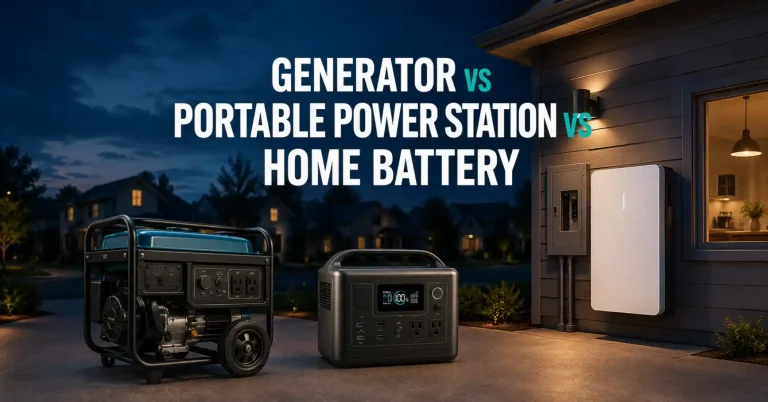
Power outages can quickly become stressful when your refrigerator stops working. Food can begin to spoil within a few hours, especially during hot weather. Because of this, many homeowners search for ways to run a refrigerator during a power outage without using a gas generator.
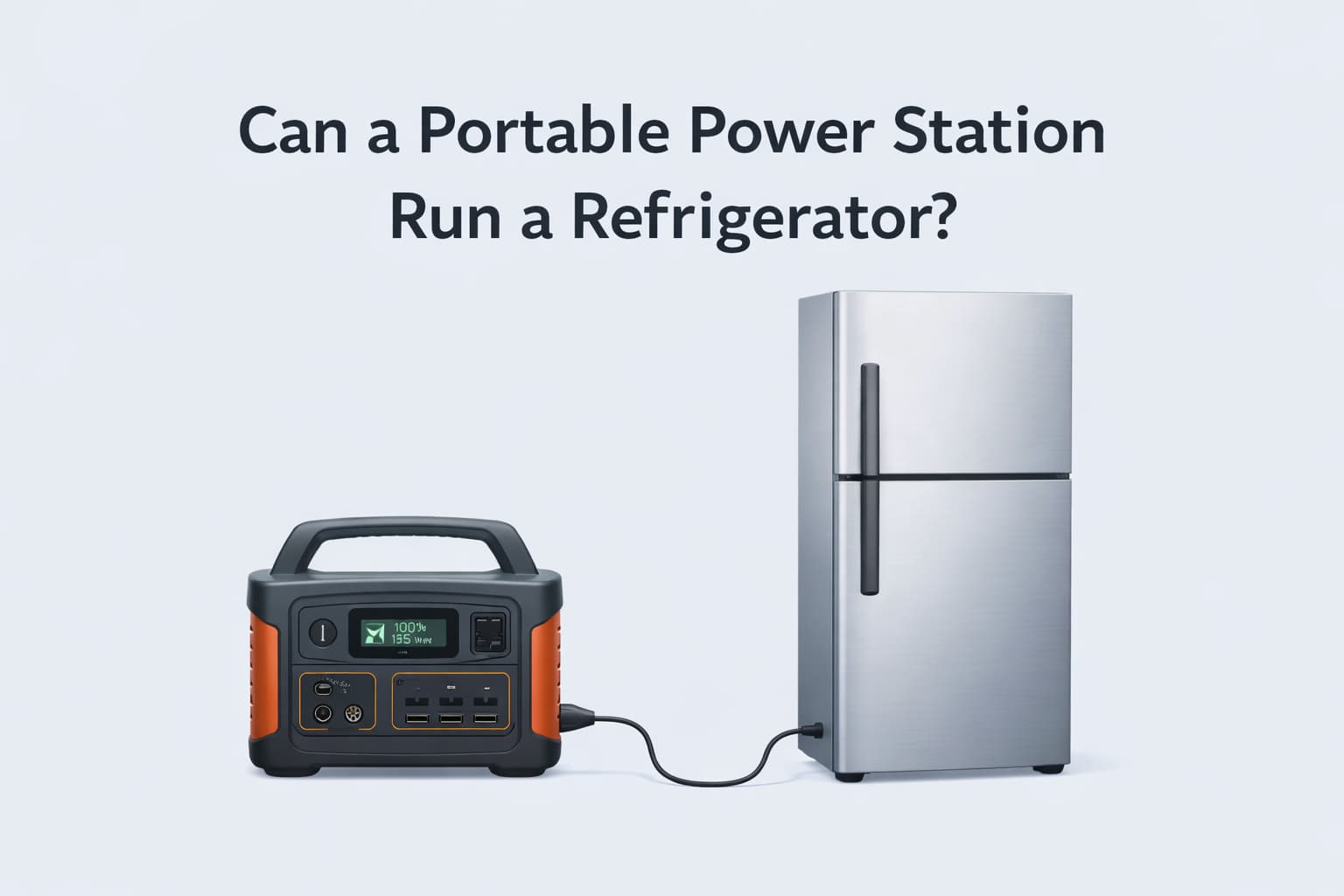
One of the most common questions is whether a portable power station can run a refrigerator.
The short answer is yes — most portable power stations can run a refrigerator, but the battery capacity and inverter size determine how long the refrigerator can stay powered.
In this guide you will learn:
- How much electricity refrigerators use
- What size portable power station you need
- How long a battery power station can run a fridge
- How solar panels extend runtime during outages
- Real-world examples of refrigerator backup systems
If you are new to backup power systems, start with:
➡ Portable Power Stations for Beginners
That guide explains how portable power stations work and how to size them for emergency backup.
Need Help Choosing the Right Size? Read our full guide: What Size Power Station Do I Need for a Refrigerator?
Can a Portable Power Station Run a Refrigerator?
Yes — most portable power stations can run a refrigerator if the system has:
• A 1,000W or larger inverter to handle compressor startup
• A battery capacity of 1,000Wh or larger
Typical refrigerator runtime:
- 1000Wh power station → about 8–16 hours
- 2000Wh power station → about 20–30 hours
- 3000Wh power station → about 1–2 days
For extended outages, systems that support solar charging can recharge the battery during daylight.
How Long a Portable Power Station Can Run a Refrigerator
| Battery Size | Average Refrigerator Runtime |
|---|---|
| 500Wh | 4–6 hours |
| 1000Wh | 8–16 hours |
| 2000Wh | 20–30 hours |
| 3000Wh | 30–48 hours |
Actual runtime depends on refrigerator efficiency, temperature conditions, and how often the door is opened.
Many homeowners extend runtime by using solar panels to recharge the battery during daylight hours.
➡ Solar Generators for Home Backup
Why Refrigerators Need More Power Than Expected
Many people only look at the running wattage of a refrigerator. However, refrigerators also require additional power when the compressor starts.
Typical refrigerator power profile:
| Power Type | Typical Range |
|---|---|
| Running wattage | 100–250 watts (average compressor draw) |
| Rated wattage | 300–800 watts |
| Startup surge | 800–2,000 watts |
| Daily energy use | 1–2 kWh |
Because of this surge requirement, the inverter size of the power station is critical.
A battery may have enough energy capacity but still fail to run a refrigerator if the inverter cannot handle the compressor startup surge.
Energy data from the U.S. Department of Energy confirms refrigerators are among the largest continuous electrical loads in most homes.
How Much Power Does a Refrigerator Use?
Refrigerator electricity consumption depends on the appliance size, insulation, and efficiency rating.
| Refrigerator Type | Running Watts |
|---|---|
| Mini fridge | 50–100 W |
| Apartment refrigerator | 100–200 W |
| Standard refrigerator | 150–250 W |
| Large French-door refrigerator | 250–400 W |
Modern appliances certified by the ENERGY STAR program often use significantly less electricity than older models.
Typical daily consumption:
- Modern refrigerators: 1–2 kWh per day
- Older refrigerators: 2–4 kWh per day
If you want to estimate your appliance more precisely, see:
➡ How Many Watts Does a Refrigerator Use
Real Refrigerator Examples and Power Needs
Looking at real appliances helps illustrate backup requirements.
| Refrigerator Type | Running Watts | Startup Surge |
|---|---|---|
| Dorm refrigerator | 70W | 300W |
| Top freezer refrigerator | 150W | 900W |
| Side-by-side refrigerator | 200W | 1200W |
| French door refrigerator | 250W | 1500W |
Exact values vary by model, but these ranges represent typical household refrigerators.
What Size Portable Power Station Do You Need?
For most households, the best portable power station size for refrigerator backup is 1,000Wh to 2,000Wh.
| Battery Size | Best Use |
|---|---|
| 500Wh | Mini fridge backup |
| 1000Wh | Refrigerator for overnight outage |
| 2000Wh | Refrigerator for ~1 day |
| 3000Wh+ | Refrigerator plus additional appliances |
If you plan to power multiple appliances, see:
➡ How to Choose the Right Portable Power Station Size
Power Station Size for Different Outage Lengths
| Outage Duration | Recommended Battery |
|---|---|
| Short outages | 500–1000Wh |
| Overnight outage | 1000–2000Wh |
| 24-hour outage | 2000–3000Wh |
| Multi-day outage | Solar generator system |
If you want to power more devices during an outage, read:
➡ What Appliances Can a Portable Power Station Run
Can a Portable Power Station Run a Refrigerator and Freezer?
Yes, but you must account for the combined power draw of both appliances.
Typical power usage:
| Appliance | Running Watts |
|---|---|
| Refrigerator | 150–250 W |
| Freezer | 150–300 W |
If both appliances run at the same time, the system may need:
• 400–600 watts running capacity
• 1,500–2,500 watts surge capacity
For this reason, many homeowners choose 2,000Wh or larger power stations when powering both appliances.
How Solar Panels Extend Refrigerator Runtime
Many portable power stations support solar charging.
Solar panels recharge the battery during daylight hours, allowing refrigerators to run much longer during outages.
Example solar setup:
| System | Solar Input | Daily Energy |
|---|---|---|
| 2000Wh battery | 400W solar panels | ~1.6 kWh per day |
If the refrigerator consumes around 1.2–1.5 kWh daily, solar panels may allow it to run indefinitely during sunny conditions.
This combination is commonly called a solar generator system.
➡ Solar Generators for Home Backup
Portable Power Station vs Gas Generator for Refrigerators
Both options can power refrigerators.
| Feature | Portable Power Station | Gas Generator |
|---|---|---|
| Noise | Quiet | Loud |
| Indoor use | Safe indoors | Outdoor only |
| Fuel | Rechargeable battery | Gasoline |
| Maintenance | Minimal | Regular maintenance |
The Federal Emergency Management Agency recommends operating gasoline generators outdoors because of carbon monoxide risks.
Common Mistakes When Using a Portable Power Station for a Refrigerator
Choosing a Power Station With Too Small an Inverter
Some units have large batteries but weak inverters that cannot start compressors.
Ignoring Startup Surge
Refrigerators may require 3–5 times their running wattage during startup.
Opening the Door Too Often
Frequent openings cause temperature loss and increase compressor runtime.
Running Too Many Appliances
Running multiple high-watt appliances can drain the battery quickly.
How Long Food Stays Safe During a Power Outage
According to the U.S. Department of Agriculture:
• Refrigerators keep food safe about 4 hours if unopened
• Full freezers stay cold about 48 hours
• Food above 40°F (4°C) may spoil quickly
This is why backup power for refrigerators can prevent significant food loss.
Example Refrigerator Backup Setup
A typical emergency refrigerator backup system might include:
• 2000Wh portable power station
• 400W solar panels
• refrigerator connected to AC outlet
This setup can keep a refrigerator running 24 hours or longer, especially if solar panels recharge the battery.
Best Portable Power Station Size for Refrigerators
If your primary goal is running a refrigerator during outages:
| Use Case | Recommended Size |
|---|---|
| Mini fridge | 500–1000Wh |
| Standard refrigerator | 1000–2000Wh |
| Refrigerator + freezer | 2000–3000Wh |
| Long outages | Solar generator system |
For recommendations see:
➡ Best Portable Power Stations for Refrigerator Backup
FAQs
Usually not. Most refrigerators require 1,000W+ surge power.
Most refrigerators use 100–250 watts while the compressor is running.
Yes. Most power stations include standard AC outlets, allowing refrigerators to plug in directly.
Yes, but you must ensure the combined wattage stays within the inverter capacity.
Related Guides
➡ Portable Power Stations for Beginners
➡ Solar Generators for Home Backup
➡ How to Choose the Right Portable Power Station Size
➡ What Appliances Can a Portable Power Station Run
➡ How Many Watts Does a Refrigerator Use
➡ How Long Will a Portable Power Station Run a Refrigerator
➡ Best Portable Power Stations for Refrigerator Backup
Final Thoughts
Portable power stations can run refrigerators during power outages, but choosing the right battery size and inverter capacity is essential.
For most homes:
• 1000Wh systems provide short backup
• 2000Wh systems run refrigerators about one day
• solar generator systems allow extended outage protection
With the right setup, you can keep food safe and maintain essential appliances even when the grid goes down.