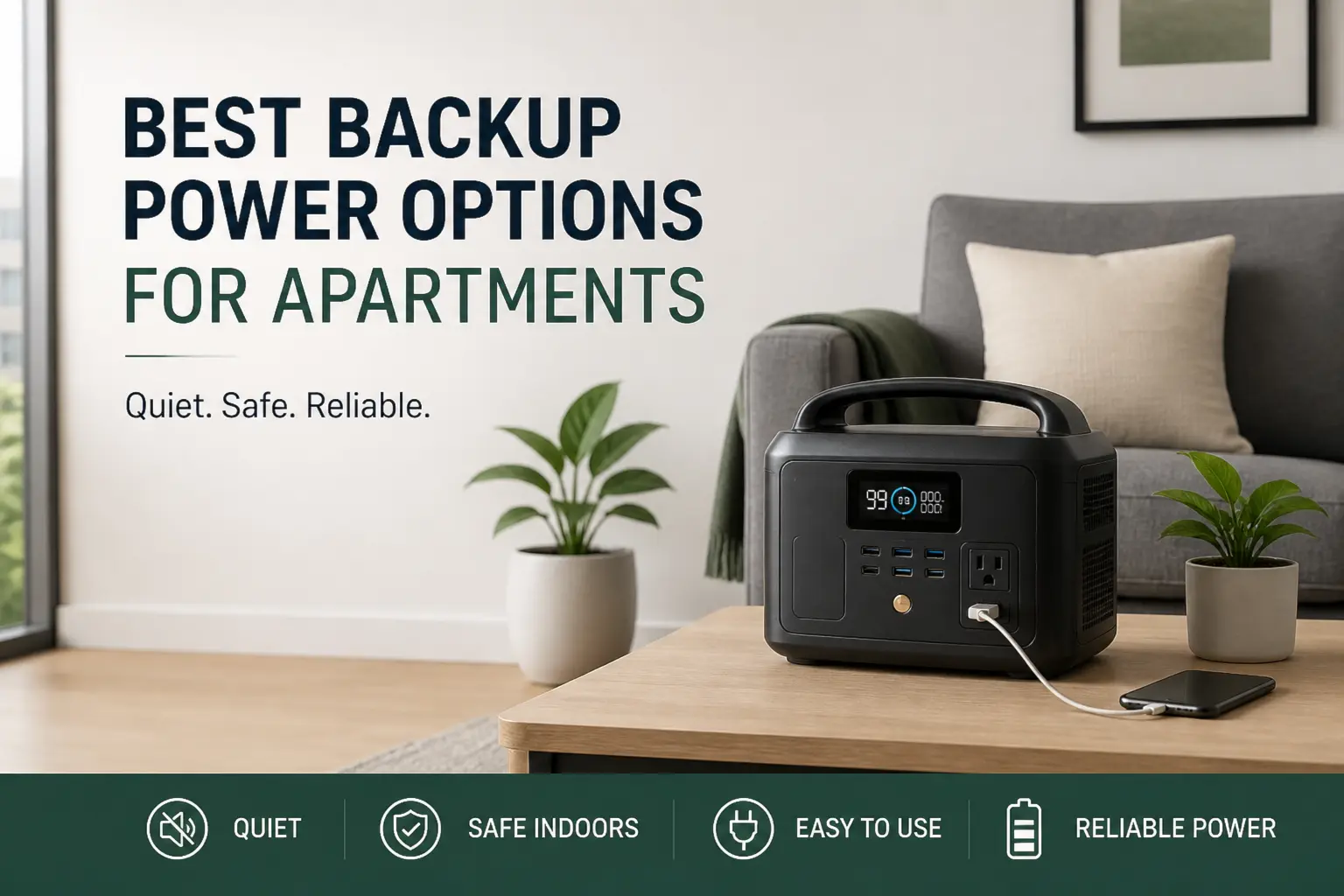
Best Backup Power Options for Apartments (Quiet, Safe, and Real-World Ready)
Introduction
If you live in an apartment, backup power looks very different than it does for a house.
You can’t install a whole-home generator. You probably don’t have outdoor space. And safety rules matter a lot more.
From my experience researching and planning real-world setups, here’s the truth:
You absolutely can have reliable backup power in an apartment – if you choose the right system.
👉 If you’re just starting, read: Backup Power Basics (Start Here Guide)
👉 If your main concern is food loss, read: What Size Power Station Do I Need for a Refrigerator?
Who This Guide Is For (and Who It’s Not)
This is for you if:
- You live in an apartment or condo
- You want safe indoor backup power
- You want a simple setup
Skip this if:
- You need whole-home backup
- You want to run heavy appliances continuously
Simple Apartment Backup Power Recommendation
If you want a safe, reliable setup without overthinking it:
- 1000-1500Wh portable power station
- At least 1000W output (ideally 1500W+ for refrigerators)
- Optional solar panel for extended outages
This setup will cover most apartment needs including refrigerator backup, charging devices, and basic lighting.
What Backup Power Options Actually Work in Apartments?
Not all backup power solutions are safe or practical in an apartment setting.
Here’s what realistically works:
- Portable power stations
- Solar generators (battery + panels)
- UPS systems (for electronics only)
And what does NOT work:
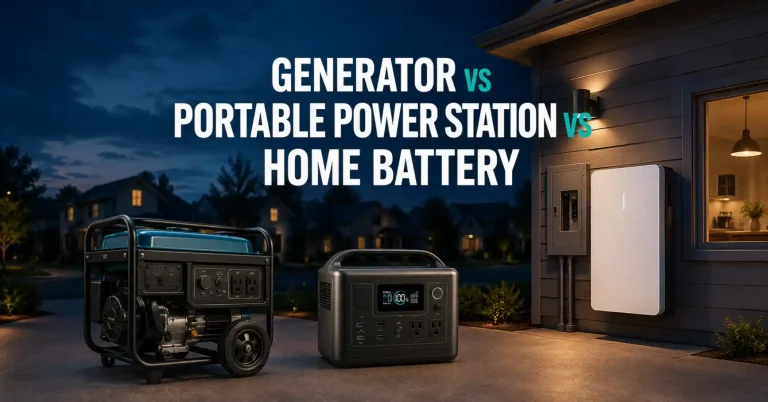
- Gas or propane generators
- Any combustion-based equipment indoors
According to the Centers for Disease Control and Prevention, improper generator use can lead to carbon monoxide poisoning.
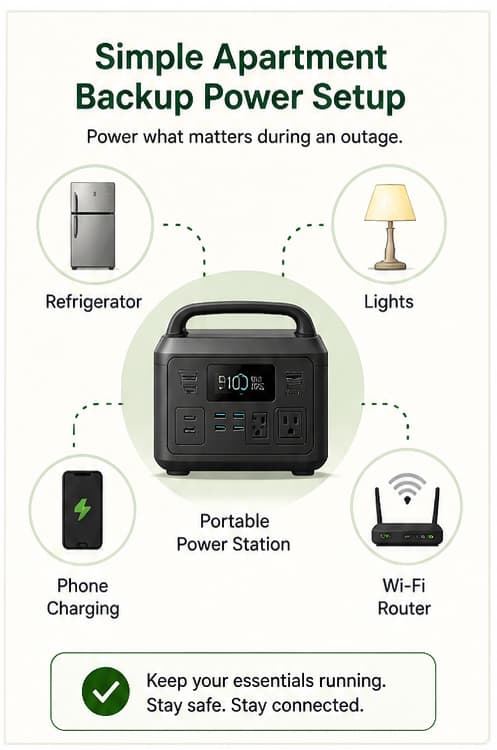
What They Can Power
With the right size unit, you can run:
- Refrigerators (short-term, cycling)
- Phones and laptops
- Wi-Fi routers
- Lights and small appliances
This is why most apartment backup setups are built around a portable power station.
Portable Power Stations (Best Overall for Apartments)
Best choice for most apartment dwellers
If you’re living in an apartment, this is the option that makes the most sense in almost every situation.
Portable power stations are:
- Indoor-safe
- Silent
- No fumes
- Plug-and-play
Unlike traditional generators, they’re designed to be used safely inside small living spaces.
What They Can Power
With the right size unit, you can run:
- Refrigerators (short-term, cycling)
- Phones and laptops
- Wi-Fi routers
- Lights and small appliances
This is why most apartment backup setups are built around a portable power station.
Best Portable Power Stations for Apartments (Quick Picks)
Specs and performance can vary slightly by model version and real-world conditions.
Best Overall for Most Apartments – EcoFlow DELTA 2
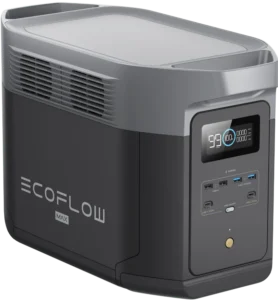
- 1024Wh capacity
- 1800W output
- Expandable battery
Strong balance of size, power, and flexibility. Handles refrigerators and essentials well.
Best Simple & Beginner-Friendly – Jackery Explorer 1000 v2
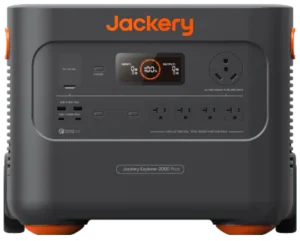
- 1070Wh capacity
- 1500W output
Great for first-time users who want something simple and reliable without a learning curve.
Best for Fast Charging – Anker SOLIX C1000
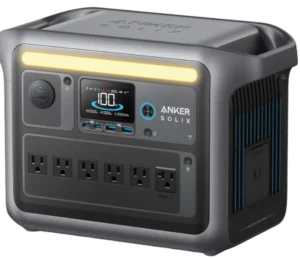
- ~1000Wh capacity
- Up to 1800-2000W output
- Very fast recharge
Ideal if you want to recharge quickly between outages or storms.
Best Value Option – BLUETTI AC180
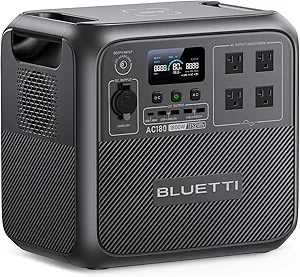
- 1152Wh capacity
- 1800W output
Solid performance with slightly higher capacity in this class.
Apartment Power Station Comparison Chart
| Model | Capacity | Output | Best For |
|---|---|---|---|
| EcoFlow DELTA 2 | 1024Wh | 1800W | Overall balance |
| Jackery 1000 v2 | 1070Wh | 1500W | Simplicity |
| Anker C1000 | ~1024Wh | 1800W+ | Fast charging |
| BLUETTI AC180 | 1152Wh | 1800W | Value |
What Can You Actually Power in an Apartment?
| Device | Typical Watts | Estimated Runtime (1000Wh) |
|---|---|---|
| Phone | 5-10W | 80+ charges |
| Wi-Fi Router | 10-20W | 40-80 hours |
| Laptop | 50-100W | 10-20 hours |
| Refrigerator | 100-200W (cycling) | Several hours to around a day |
| Fan | 30-60W | 15-30 hours |
Appliance power usage varies significantly by model, age, and efficiency. Always check your device label.
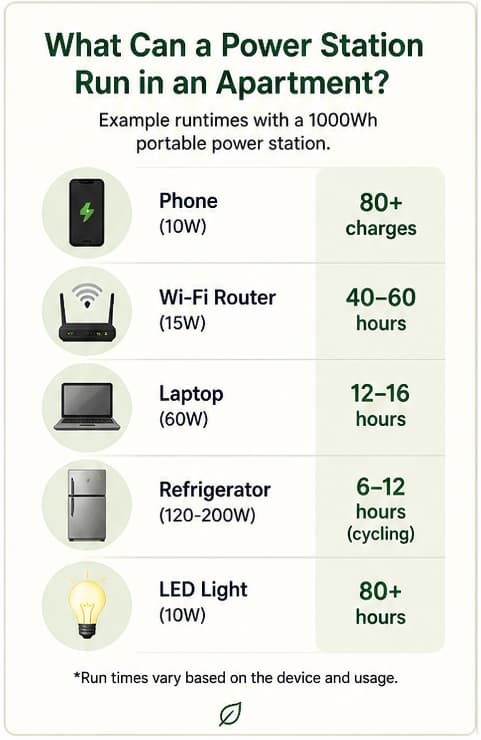
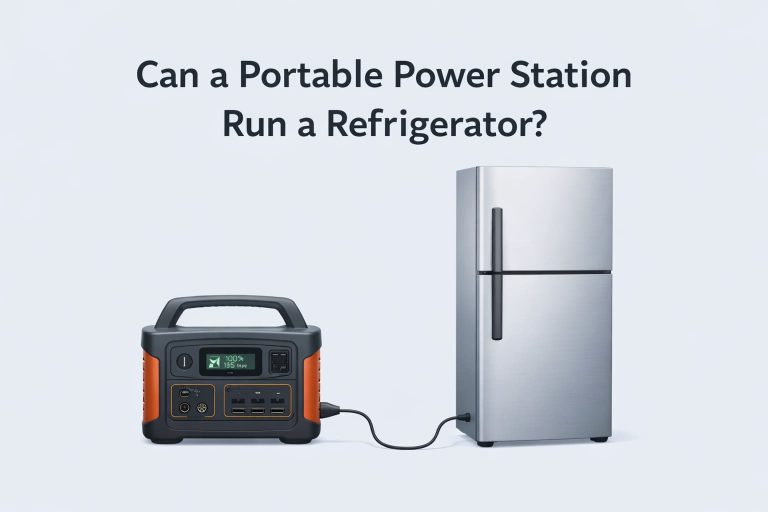
Can You Run a Refrigerator in an Apartment During an Outage?
Yes – but you need to understand how refrigerators actually use power.
- They cycle on and off
- They require higher startup power
Typical usage:
- Running: 100-200W
- Startup surge: 800-1500W or more
This is why output rating matters just as much as battery size.
Recommended setup:
- 1000Wh minimum
- 1500W+ output preferred
👉 Full breakdown: What Size Power Station Do I Need for a Refrigerator?
What Backup Power Looks Like in a Real Apartment Outage
When power goes out, the goal isn’t to run everything.
It’s to protect what matters:
- Food
- Communication
- Basic lighting
With a 1000-1500Wh system, you can realistically:
- Keep your fridge running intermittently
- Charge devices
- Stay connected
How Long Will Backup Power Actually Last? (Reality Check)
This is where expectations matter.
A “1000Wh” battery does not deliver 1000Wh in real use.
- Most systems deliver 80-90% usable energy
- Expect around 850-900Wh usable
Runtime depends on:
- What you’re running
- How often it cycles
How Do You Recharge in an Apartment During an Outage?
This is one of the most overlooked parts of backup planning.
Before the outage
- Fully charge from wall power
During the outage
- Car charging (very useful fallback)
- Solar panels (if available)
Without a recharge plan, even the best system eventually runs out.
Can You Realistically Use Solar in an Apartment?
Yes, but expectations should be realistic.
Options include:
- Balcony setups
- Temporary outdoor placement
- Window charging (limited efficiency)
Solar is often limited by shading and positioning, but can still extend runtime.
How to Choose the Right Apartment Backup Power Setup
Battery Size Guidelines
- 300-500Wh → essentials only
- 500-1000Wh → small setup
- 1000-2000Wh → refrigerator + essentials
- 2000Wh+ → extended backup
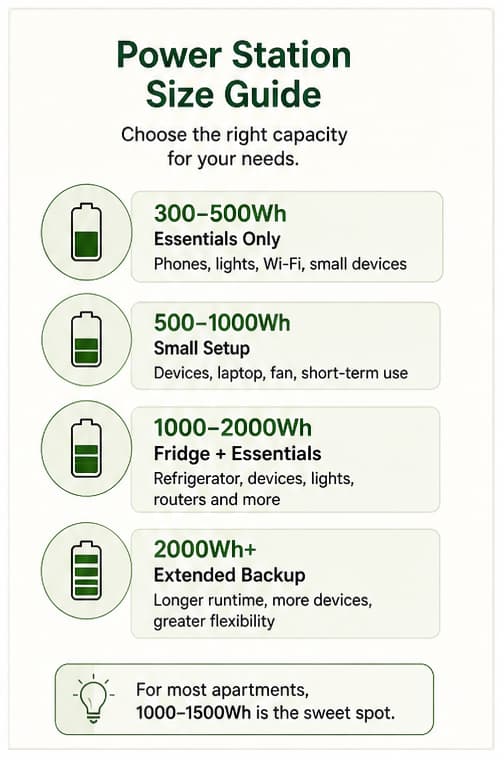
Before You Buy (Quick Checklist)
- Do I need to run a refrigerator?
- How long do outages last here?
- Where will I store it?
- How will I recharge it?
- Do I want solar later?
How to Actually Use a Power Station in an Apartment
- Use heavy-duty extension cords if needed
- Keep cords accessible
- Avoid overloading outlets
- Set up before an outage
Test Your Backup Power Before You Need It
Before an outage:
- Run your refrigerator on it
- Monitor battery usage
- Practice your setup
This gives you confidence and avoids surprises.
Where Should You Store a Power Station?
- Cool, dry space
- Not in hot or enclosed areas
- Easy to access
- Allow airflow
How to Maintain a Power Station
Keeping your system ready is simple but important:
- Recharge every 3-6 months
- Avoid storing fully drained
- Store in moderate temperatures
- Keep battery around 50-80% for long-term storage
- Turn it on occasionally to check performance
A quick check every few months ensures it’s ready when needed.
Using Backup Power for Medical Devices
Portable power stations are commonly used for:
- CPAP machines
- Oxygen concentrators
If you rely on medical equipment:
- Check wattage requirements carefully
- Confirm runtime needs (especially overnight)
- Test your setup in advance
Always confirm requirements with your device manufacturer before relying on backup power.
Apartment Rules and Considerations
Before buying:
- Check lease or HOA rules
- Confirm balcony or outdoor restrictions
- Review safety guidelines
Most battery systems are allowed, but solar may be restricted.
Seasonal Differences in Apartment Outages
- Summer: higher refrigerator load, more outages
- Winter: heating challenges
Most power stations cannot run space heaters.
Why a Power Bank Isn’t Enough
- Power banks = small electronics
- Power stations = real backup power
How Quiet Are These Options?
- Power stations → silent
- Solar generators → silent
- UPS → silent
What You Should NOT Use in an Apartment
🚫 Gas generators
🚫 Propane generators
The Centers for Disease Control and Prevention warns these can cause carbon monoxide poisoning.

Common Apartment Backup Power Mistakes
- Buying too small
- Ignoring surge wattage
- Not planning recharge
- Waiting until an outage
Limitations of Apartment Backup Power
- Cannot power everything
- Limited runtime without recharge
- Solar limitations
The goal is essentials, not full-home power.
Is Backup Power Worth It?
- Food loss: $100-500+
- Hotel stays: $100+
The Federal Emergency Management Agency recommends preparing for outages.
Final Thoughts: The Smart Way to Prepare for Apartment Outages
Apartment backup power doesn’t need to be complicated.
It’s not about trying to power everything in your home. It’s about protecting what matters most when the power goes out.
For most apartment setups, that means:
- Keeping your refrigerator running long enough to prevent food loss
- Keeping your phone charged so you can stay connected
- Having basic lighting and power for small essentials
That’s it.
What I Would Do Starting From Scratch
If I were setting this up today, I would keep it simple:
👉 Start with a 1000–1500Wh portable power station
👉 Make sure it has at least 1500W output for flexibility
👉 Test it once so you know exactly how it performs
👉 Add solar later if you want longer backup capability
This gives you a reliable foundation without overbuying or overcomplicating things.
The Real Goal
The goal isn’t to replace your apartment’s power – it’s to stay prepared, safe, and comfortable during outages.
Once you have a basic system in place, you’re already ahead of most people.
External Resources
U.S. Consumer Product Safety Commission
Centers for Disease Control and Prevention
Federal Emergency Management Agency