
How Long Will a Portable Power Station Run a CPAP? Real-World Backup Power Guide
If you rely on a CPAP machine for sleep apnea, one of the biggest concerns during a power outage is simple:
How long will a portable power station actually keep a CPAP running?
The answer depends on:
- Your CPAP model
- Whether you use the heated humidifier
- Battery size (Wh)
- Pressure settings
- Whether you use DC or AC power
In this guide, I’ll break down realistic CPAP runtime estimates, common mistakes people make, how to choose the right portable power station, and how to build a safer emergency backup setup for outages and travel.
👉 Related Guides:
- Portable Power Stations for Beginners
- What Size Power Station Do I Need for a Refrigerator?
- Best Portable Power Stations for Home Backup (coming soon)
- Best Portable Power Stations for Apartments
- Power Station vs UPS: What’s the Difference? (coming soon)
- Emergency Power Checklist (coming soon)
Who This Guide Is For (and Who It’s Not)
This guide is best for people who:
- Use a CPAP or BiPAP machine nightly
- Want emergency backup power
- Live in hurricane or storm-prone areas
- Camp or RV with a CPAP
- Need reliable overnight runtime
- Want safer medical preparedness during outages
This guide may not be enough if:
- You require whole-home backup
- You depend on large medical equipment
- You need central HVAC backup
- You need automatic transfer systems
How Long Can a Portable Power Station Run a CPAP?
For most people:
| CPAP Setup | Estimated Runtime |
|---|---|
| CPAP without humidifier | 1–3 nights |
| CPAP with humidifier | 4–10 hours |
| Small travel battery | 1 night |
| Large 1000Wh+ power station | Multiple nights |
The heated humidifier and heated hose are usually the biggest power drains.
I’ve noticed many people assume the CPAP machine itself consumes huge amounts of electricity, but most of the extra power usage often comes from the heating system.
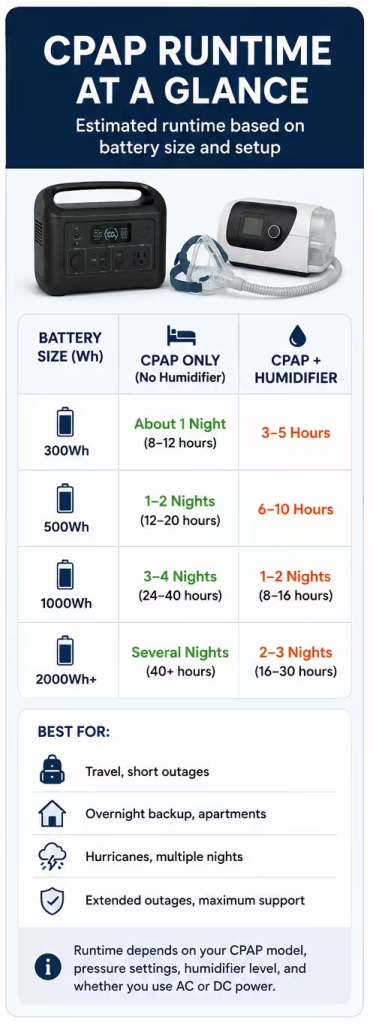
CPAP Runtime Comparison Chart by Battery Size
| Battery Size | CPAP Only | CPAP + Humidifier |
|---|---|---|
| 300Wh | About 1 night | 3–5 hours |
| 500Wh | 1–2 nights | 6–10 hours |
| 1000Wh | 3–4 nights | 1–2 nights |
| 2000Wh | Several nights | 2–3 nights |
Actual runtime depends on:
- Pressure settings
- Machine efficiency
- Humidifier temperature
- DC vs AC usage
- Battery age
- Room temperature
Runtime Estimates for Popular CPAP Machines
| CPAP Model | Approximate Watt Usage | Estimated Runtime on 500Wh |
|---|---|---|
| ResMed AirSense 10 | 30–60W | 8–14 hours |
| ResMed AirSense 11 | 25–60W | 8–15 hours |
| Philips DreamStation 2 | 30–65W | 7–13 hours |
| Travel CPAP Machines | 15–40W | 12–24+ hours |
These estimates assume moderate settings and typical efficiency losses.
Typical CPAP Power Usage
Most CPAP machines use:
| CPAP Configuration | Approximate Power Draw |
|---|---|
| CPAP only | 30–60W |
| CPAP + humidifier | 60–120W |
| CPAP + heated hose | 80–150W |
Popular CPAP brands include:
- ResMed
- Philips
- Fisher & Paykel
BiPAP vs CPAP Power Usage
BiPAP machines often use more power than standard CPAP machines because they typically operate at:
- Higher pressures
- More advanced airflow adjustments
- More complex therapy modes
That means:
- Shorter runtime
- Larger battery needs
- Greater importance of efficient DC operation
If you use a BiPAP machine, it’s usually smart to size your backup battery larger than the minimum estimate.
Why Heated Humidifiers Reduce Runtime So Much
A CPAP machine itself may use relatively little electricity, but the humidifier acts more like a small heater.
That means:
- Faster battery drain
- Reduced overnight runtime
- Larger battery requirements
During emergencies, many users temporarily disable:
- Heated humidifier
- Heated hose
This can dramatically increase runtime.
Real-World CPAP Runtime Examples
Small 300Wh Portable Power Station
Best for:
- Travel
- Emergency overnight backup
- Minimal CPAP settings
Expected runtime:
- CPAP only: about 1 night
- With humidifier: a few hours
Mid-Size 500–700Wh Power Station
Best for:
- Apartment emergency kits
- Weekend camping
- Hurricane preparation
- Reliable overnight backup
Expected runtime:
- CPAP only: 2–3 nights
- With humidifier: around 1 night
For many people, this is the practical sweet spot.
Large 1000Wh+ Portable Power Station
Best for:
- Multi-night outages
- Medical preparedness
- Extended storm outages
- Multiple devices
Expected runtime:
- CPAP only: several nights
- With humidifier: 1–2 nights
This is where backup power starts feeling much less stressful.
Best Backup Setup by Situation
Best Setup for Apartment Living
500–1000Wh portable power station with quiet operation and compact storage.
Best Setup for Hurricanes
1000Wh+ battery with solar charging capability and vehicle charging backup.
Best Setup for Camping
300–500Wh lightweight power station with DC CPAP adapter.
Best Setup for Severe Sleep Apnea
Larger battery capacity with tested emergency backup plans and multiple recharge methods.
Common CPAP + Portable Power Station Pairings
| CPAP Machine | Common Portable Power Station Pairings |
|---|---|
| ResMed AirSense 10 | Jackery 500, EcoFlow River 2 Pro |
| ResMed AirSense 11 | Bluetti AC70, EcoFlow Delta 2 |
| Philips DreamStation | Anker SOLIX C800, Jackery 1000 |
| Travel CPAP Machines | Smaller 300–500Wh stations |
Popular power station brands include:
- Jackery
- EcoFlow
- Bluetti
- Anker
Portable Power Station vs Dedicated CPAP Battery
| Dedicated CPAP Battery | Portable Power Station |
|---|---|
| Smaller and lighter | More versatile |
| Often airline-friendly | Powers multiple devices |
| Usually limited to CPAP use | Useful during outages |
| Often more expensive per Wh | Better overall long-term value |
Portable power stations usually make more sense for home emergency preparedness because they can also power:
- Phones
- Lights
- Internet modem
- Fans
- Small electronics
Can You Run Other Devices Too?
Many people also want to power:
- Phone chargers
- Internet modem/router
- LED lights
- Fans
- Tablets
- Small medical devices
However, adding more devices reduces CPAP runtime.
This is why larger battery capacity becomes helpful during longer outages.
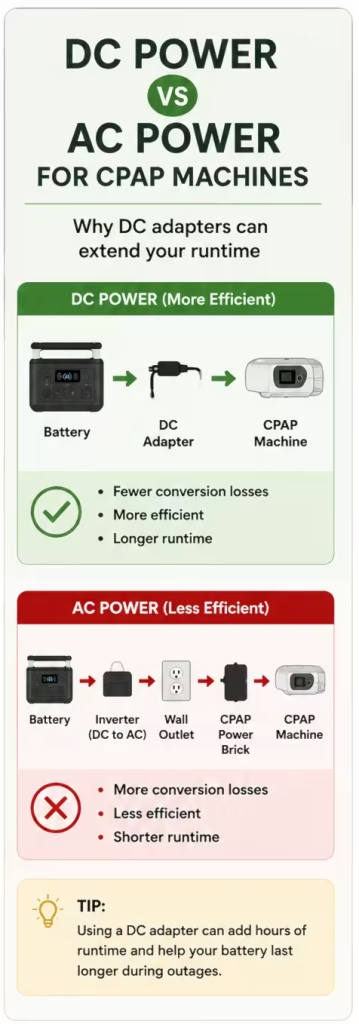
DC Power vs AC Power for CPAP Machines
One of the smartest ways to improve runtime is using a DC adapter instead of the normal wall plug.
Using AC outlets creates inverter losses.
Using DC:
- Improves efficiency
- Extends runtime
- Reduces wasted battery power
Some CPAP manufacturers sell official DC cables specifically for battery use.
Why DC Adapters Matter So Much
One of the easiest ways to improve CPAP battery runtime is using a DC adapter instead of plugging your CPAP into a normal wall-style AC outlet on the power station.
Many people do not realize that AC outlets create energy losses because the portable power station has to convert battery power before your CPAP can use it.
Standard AC Setup
Battery → inverter → wall outlet → CPAP power brick → CPAP machine
Every conversion step wastes some energy.
More Efficient DC Setup
Battery → DC adapter → CPAP machine
This setup skips much of the inverter conversion process, which usually improves efficiency and extends runtime.
How Much Difference Does DC Make?
In many cases, using a DC adapter can noticeably improve overnight runtime.
That may mean:
- extra hours of usage
- better multi-night backup performance
- smaller battery requirements
- less stress during outages
For some setups, the difference can be surprisingly large, especially when trying to maximize runtime from smaller portable power stations.
Why This Matters During Emergencies
During a short outage, efficiency may not seem important.
But during:
- hurricanes
- winter storms
- camping trips
- multi-night outages
…every watt-hour matters.
I’ve noticed many people underestimate how quickly battery capacity disappears once inverter losses and humidifier heating are involved.
Should You Buy an Official CPAP DC Adapter?
Whenever possible, it’s usually best to use:
- manufacturer-approved cables
- official DC adapters
- compatible voltage settings
Using the wrong adapter may:
- reduce efficiency
- cause connection issues
- potentially damage equipment
Always verify compatibility with your CPAP manufacturer before purchasing adapters.
CPAP Runtime Calculator: Estimate How Long Your Power Station Will Last
Use this calculator to estimate how long a portable power station may run your CPAP or BiPAP machine during a power outage, camping trip, or emergency backup situation.
Enter your battery size, estimated CPAP watt usage, and whether you plan to use humidifier or heated hose features. The calculator will estimate your runtime in hours and nights.
For the most accurate result, check your CPAP power adapter or manual for wattage details. If you are not sure, use the built-in estimates below as a starting point.
CPAP Runtime Calculator
Estimate how long a portable power station may run your CPAP or BiPAP machine.
Disclaimer
This checklist is for general educational and emergency preparedness purposes only. Actual backup power needs vary based on your devices, outage conditions, and battery setup. If you rely on medical equipment, always test your backup system before an emergency and follow manufacturer safety guidelines.
CPAP Runtime Calculator Formula
A simple estimate:
Runtime (hours)=CPAP Watt UsageBattery Capacity (Wh)×0.85
Example:
- 500Wh battery
- 40W CPAP usage
- 85% efficiency
Estimated runtime:
- Around 10–11 hours
How Much Does a CPAP Cost to Run?
Most CPAP machines are fairly energy efficient.
Typical electricity cost:
- Roughly a few dollars per month
- Often less than many household appliances
The humidifier is usually the biggest contributor to electricity usage.
What Size Portable Power Station Is Best for a CPAP?
Good for Most People: 500–1000Wh
This range usually provides:
- Reliable overnight operation
- Better safety margin
- Multi-night runtime without heating features
- Enough extra power for small electronics
For medical preparedness, extra battery capacity is often worth it.
Features to Look for in a CPAP Backup Power Station
Pure Sine Wave Inverter
Medical devices should use pure sine wave output whenever possible.
This helps provide:
- Cleaner power
- Better compatibility
- Reduced risk of issues
LiFePO4 Battery Chemistry
LiFePO4 batteries typically offer:
- Longer lifespan
- Better safety
- More charging cycles
This matters for emergency equipment that may sit unused for months.
Pass-Through Charging
Useful if:
- The power station stays plugged in
- You want backup readiness automatically
Quiet Operation
Portable power stations are dramatically quieter than gas generators.
For bedroom use, this matters a lot.
Cold Weather Battery Performance
Cold weather can reduce battery performance.
During:
- Winter storms
- Camping trips
- Freezing conditions
You may notice:
- Reduced runtime
- Slower charging
- Lower efficiency
LiFePO4 batteries generally perform better than older battery chemistries, but cold temperatures still matter.
Recharge Time Expectations
Recharge speed depends on:
- Battery size
- Charger wattage
- Solar conditions
Typical examples:
- Wall outlet: 1.5–8 hours
- Car charging: slower
- Solar charging: highly weather dependent
Larger batteries usually take longer to recharge.
What Happens if Your CPAP Loses Power?
For many people, losing CPAP power means:
- Interrupted sleep
- Fatigue
- Headaches
- Poor sleep quality
- Breathing disruptions
For severe sleep apnea, backup planning may become medically important during extended outages.
Medical Preparedness During Power Outages
If your CPAP is medically necessary, it helps to prepare for more than just one night.
I strongly recommend having:
- Fully charged backup battery
- DC adapter cable
- Flashlight nearby
- Vehicle charging option
- Surge protection
- Backup extension cord
- Emergency contact plan
Some utility companies also offer medical priority programs for customers using medical equipment.
CPAP Emergency Backup Checklist
Recommended Emergency Setup
- Portable power station
- DC adapter for CPAP
- Fully charged battery
- Flashlight or lantern
- Phone charging cable
- Surge protector
- Solar panel (optional)
- Car charging cable
- Extension cord
- Extra distilled water
Common CPAP Backup Power Mistakes
- Buying too small
Tiny batteries often struggle to last through a full night, especially if humidifier heating is enabled. - Forgetting how much power the humidifier uses
Heated humidifiers and heated hoses can dramatically reduce CPAP battery runtime during outages. - Never testing the setup before an emergency
Testing your backup power setup before storm season is extremely important so you know what to realistically expect. - Relying on tiny phone-style power banks
Most small USB battery packs are not designed to safely power a CPAP machine overnight. - Storing batteries fully drained for long periods
Letting portable power stations sit empty for extended periods can reduce long-term battery lifespan. - Ignoring inverter efficiency losses
Using standard AC wall outlets instead of DC adapters can waste battery power and shorten runtime. - Assuming solar panels provide unlimited backup power
Solar charging depends heavily on weather, sunlight, panel size, and charging conditions. - Waiting until storm season to prepare
I’ve noticed many people only start thinking about CPAP backup power once severe weather warnings begin, which can lead to rushed buying decisions and limited product availability.
How to Test Your CPAP Backup Setup
Before storm season:
- Fully charge the power station
- Connect your CPAP
- Run it for one full night
- Monitor battery percentage
- Test again with humidifier disabled
- Compare runtime differences
This gives you realistic expectations before a real emergency.
Can a UPS Run a CPAP?
Yes, but usually only for short periods.
A UPS (uninterruptible power supply):
- Helps during brief outages
- Prevents sudden shutdowns
- Usually has limited runtime
Portable power stations are typically better for:
- Overnight backup
- Multi-night outages
- Camping
- Emergency preparedness
👉 Related Guide:
- Power Station vs UPS: What’s the Difference? (coming soon)
Portable Power Stations vs Gas Generators for CPAP Use
Portable power stations are usually better for CPAP use because they are:
- Silent
- Indoor-safe
- No fumes
- No gasoline storage
- Easier for overnight use
Gas generators can recharge batteries during the day, but directly running a CPAP from a generator overnight is usually less practical.
Camping With a CPAP
Portable power stations are popular for:
- RV travel
- Tent camping
- Van life
- Off-grid cabins
Benefits include:
- Silent operation
- No fuel smell
- Indoor-safe usage
- Solar charging compatibility
For camping, many people disable heated humidifiers to extend runtime significantly.
Real-World Outage Scenarios
One-Night Thunderstorm Outage
A 500Wh unit may easily handle a single night of CPAP usage without humidifier heating.
Multi-Day Hurricane Outage
A 1000Wh+ system with solar charging becomes far more practical for extended emergencies.
Apartment Emergency Setup
Portable power stations work especially well in apartments because:
- No fuel storage required
- No outdoor operation needed
- Quiet enough for indoor use
Winter Ice Storm
Cold temperatures can slightly reduce battery performance, so additional capacity helps.
When Solar Actually Helps
Solar panels can be extremely useful for:
- Multi-day outages
- Camping
- RV travel
- Long-term emergency preparedness
However, many people overestimate solar charging.
Reality:
- Cloudy weather slows charging
- Hurricanes often reduce sunlight
- Winter charging is slower
- Panel wattage matters significantly
Solar is best viewed as a supplement, not unlimited power.
Solar Panels for CPAP Backup
Portable solar panels can help recharge your power station during longer outages.
For serious emergency planning, many people combine:
- Larger battery capacity
- Solar charging
- Vehicle charging backup
This layered approach is usually much more reliable.
Airline and Travel Considerations
If you fly with a CPAP battery or portable power station:
- Airlines have watt-hour limits
- Large batteries may require approval
- Lithium battery rules vary
Always verify airline rules before traveling.
FAA guidance:
https://www.faa.gov/hazmat/packsafe/lithium-batteries
FAQs
Yes. Many portable power stations can easily run a CPAP overnight, especially if humidifier heating is disabled.
It depends on the Jackery model and your settings, but many mid-size units can provide one or more nights without humidifier heat.
Yes. Many users successfully power AirSense machines using EcoFlow portable power stations.
Yes. Heated humidifiers are often the largest power drain in a CPAP setup.
Yes. Many portable power stations can recharge using solar panels.
Many people temporarily disable the humidifier during outages to extend runtime, though comfort may decrease.
Many users should consider around 1000Wh capacity for multi-night backup, especially with humidification.
No. Gas generators should never be used indoors because of carbon monoxide risks.
Final Thoughts
For many people, CPAP backup power is not just about convenience. It’s about safety, sleep quality, and peace of mind during outages.
If I were starting today, I’d focus on:
- A reliable 500–1000Wh portable power station
- A DC adapter for better efficiency
- Testing the setup before storm season
- Planning for multi-night outages instead of just one night
The biggest takeaway is this:
Your humidifier settings matter almost as much as your battery size.
Once people understand that, choosing the right backup power solution becomes much easier.