What Size Power Station for a Refrigerator? (Guide)
When the power goes out, one of the first things many people worry about is the refrigerator. I understand why. Losing a fridge full of groceries can get expensive quickly, and during hot weather even a short outage can create stress.
Many people buy a portable power station based only on marketing claims, then realize later it will not start their refrigerator compressor or does not last overnight. I want to help you avoid that mistake.
This guide explains what size power station you need for a refrigerator, how to estimate runtime, how startup surge works, and how to choose the right size for your home.
If you are new to backup power, also read our Backup Power Basics | Start Here Guide for Homes & Emergencies and Portable Power Stations for Beginners.
If your power is already out and you need immediate tips, read our How to Keep a Refrigerator Running During a Power Outage guide.
Quick Answer: What Size Power Station for a Refrigerator?
For most homes, the best target is:
- 1000W to 1500W inverter
- 1000Wh to 2000Wh battery
- 2000W+ surge capability
If you want overnight backup or live in a storm-prone area, I would personally look at 2000Wh+ for extra peace of mind.
Still Deciding If a Power Station Can Run a Refrigerator at All?
Before choosing a size, read our Can a Portable Power Station Run a Refrigerator? guide. It explains how battery backup works, real runtime examples, and what to expect during outages.
My Honest Recommendation for Most People
If you have a standard household refrigerator, I would start by looking at:
A 2000Wh LiFePO4 power station with strong surge output
That is usually the best balance of:
- Runtime
- Reliability
- Safety margin
- Long battery lifespan
- Enough power for other essentials too
Quick Refrigerator Power Station Size Chart
| Refrigerator Type | Recommended Inverter | Recommended Battery Size |
|---|---|---|
| Mini fridge | 500W+ | 500Wh to 1000Wh |
| Standard refrigerator | 1000W to 1500W | 1000Wh to 2000Wh |
| Large family refrigerator | 1500W to 2000W | 2000Wh to 3500Wh |
| Refrigerator + freezer | 2000W+ | 3000Wh+ |
Use This Refrigerator Power Station Calculator
Before buying a power station, use the calculator below to estimate what size battery and inverter you may need for your refrigerator.
Refrigerator Power Station Size Calculator
Use this simple calculator to estimate what size portable power station you may need to run a refrigerator during a power outage.
Note: This calculator gives an estimate. Refrigerator wattage varies by model, age, room temperature, door openings, and compressor cycling.
How to Read Your Calculator Results
The calculator gives you two key numbers:
Recommended Battery Size
How much stored energy you likely need.
Recommended Inverter Size
Whether the unit can handle compressor startup surge.
For refrigerator backup, I would rather go a little bigger than cut it close.
Typical Refrigerator Wattage Chart
| Refrigerator Type | Running Watts | Startup Surge |
|---|---|---|
| Mini fridge | 50 to 120W | 300 to 600W |
| Top freezer | 100 to 250W | 1000 to 1500W |
| Side-by-side | 150 to 300W | 1200 to 2000W |
| French door | 180 to 350W | 1500 to 2500W |
Actual power varies by age, efficiency, room temperature, and model.
Where to Find Refrigerator Power Info
Check these common locations:
- Inside side wall
- Behind crisper drawers
- Rear panel sticker
- Near model and serial tag
- Owner manual
If you cannot find it, use a plug-in watt meter.
Why Refrigerators Need More Power Than You Think
Refrigerators cycle on and off.
That means they may average modest power use, but when the compressor starts they can briefly demand much higher wattage.
That startup surge is why many undersized power stations fail.
According to the U.S. Department of Energy, refrigerator energy use depends on age, size, room temperature, settings, and efficiency.
Can a Power Station Run a Refrigerator Overnight?
Yes, often.
Many efficient refrigerators can run overnight on:
- 1500Wh units in some cases
- 2000Wh units for better confidence
- 3000Wh+ units for stronger reserve
If I had a family fridge full of food, I would rather have extra margin than barely enough.
Weather Affects Runtime More Than Most People Realize
Hot weather makes refrigerators cycle more often.
That means:
- Summer outages may drain batteries faster
- Warm garages increase power demand
- Frequently opening doors shortens runtime
- Full refrigerators often hold temperature better
This is another reason I prefer extra battery capacity.
Can I Power More Than Just the Refrigerator?
Often yes, depending on battery size.
Many people also run:
- Phones
- Internet router
- LED lights
- CPAP machine
- Laptop
- Small fan
Larger 2000Wh+ systems give more flexibility.
Refrigerator Runtime Formula
Use this estimate:
Battery Wh × 0.85 ÷ Average Running Watts = Estimated Hours
Example
1500Wh battery powering a fridge averaging 150W:
1500 × 0.85 = 1275 usable watt-hours
1275 ÷ 150 = about 8.5 hours
Real-world results vary.
Why Refrigerator Backup Matters Financially
Spoiled food adds up quickly.
Approximate replacement costs:
- Small fridge contents: $100+
- Family refrigerator: $300+
- Full fridge + freezer: $500+ or more
One serious outage can justify owning backup power.

Recommended Sizes by Real-Life Scenario
Apartment or Condo
Need fridge, phones, maybe fan.
Best fit: 1500Wh to 2000Wh
Family Home in Storm Area
Need overnight refrigerator backup.
Best fit: 2000Wh+
Elderly Parent Emergency Setup
Need simple dependable plug-and-play backup.
Best fit: 1000Wh to 1500Wh quality unit
Rural or Multi-Day Outage Risk
Need extended backup.
Best fit: 3000Wh+ with solar panels
What Happens If the Power Station Is Too Small?
You may experience:
- Compressor will not start
- Overload shutdown
- Battery drains too fast
- Does not last overnight
- Need to upgrade later
This is why battery size and surge output both matter.
Mistakes I’d Personally Avoid
- Buying based only on peak watts
- Ignoring surge rating
- Choosing unknown brands with weak support
- Buying too small to save money
- Forgetting recharge speed
- Waiting until storm season
If It Were My Home
If I were buying mainly for refrigerator backup:
- Small apartment fridge: 1000Wh class
- Standard family fridge: 1500Wh to 2000Wh
- Large fridge or fridge + freezer: 3000Wh+
- Storm prep: expandable system with solar
For most households, I would rather choose a 2000Wh unit than regret going too small.
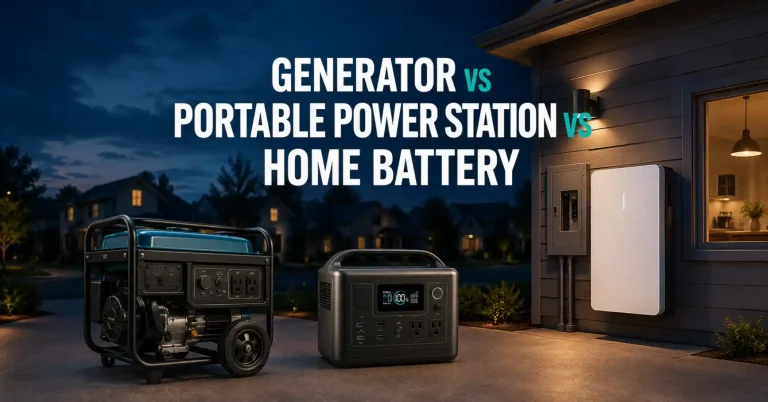
Power Station vs Generator for Refrigerators
Power Station Better For:
- Indoor safe use
- Quiet operation
- No fuel storage
- Apartment-friendly
- Easy plug-and-play backup
Generator Better For:
- Whole-home loads
- Long outages without solar
- Multiple heavy appliances
Read next: Whole-Home Backup Options
Before Storm Season, Test Your Setup
Do not wait until the outage starts.
Before storm season:
- Plug refrigerator into power station
- Watch for overload warnings
- Let it run through one compressor cycle
- Check runtime estimate
- Recharge fully
- Store in easy-access location
This simple test can save a lot of stress later.
Refrigerator Food Safety During Outages
According to the U.S. Food and Drug Administration:
- Keep refrigerator doors closed as much as possible
- Unopened fridge keeps food cold about 4 hours
- Full freezers hold temperature longer
Backup power plus keeping doors closed is the smartest combination.
Need immediate outage strategies beyond battery backup? See How to Keep a Refrigerator Running During a Power Outage.
FAQs
Sometimes, yes. A 1000Wh power station can run many efficient refrigerators for several hours, especially if the doors stay closed and room temperatures are moderate. It is usually better for short outages than full overnight backup.
Usually not a full-size refrigerator. Many standard refrigerators need higher startup surge power when the compressor turns on. A 500W unit may work with some mini fridges or highly efficient compact models.
Many refrigerators can run overnight or longer on a 2000Wh unit, depending on how often the compressor cycles, room temperature, and how often the door is opened. In real-world use, runtime can vary widely.
For many households, yes. A 2000Wh class unit often provides a strong balance of refrigerator runtime, surge capability, and enough reserve power for phones, lights, routers, or medical devices.
Personally, I prefer some extra margin for emergency backup gear. A slightly larger unit often means less stress, longer runtime, and more flexibility during outages.
Sometimes, but it depends on the power station size and the startup surge of both appliances. Many households need a larger 3000Wh+ unit with strong inverter output for this setup.
Yes. Many modern power stations support solar charging. This can be very useful during daytime outages, especially if you need to keep the refrigerator running through multiple days.
Yes. Every time the door opens, warm air enters and the compressor may run more often. Keeping the door closed helps preserve food and battery runtime.
For many buyers, yes. LiFePO4 batteries are popular because they usually offer longer cycle life, good safety characteristics, and strong long-term value.
Sometimes. For refrigerator backup and indoor quiet use, many people prefer power stations. For whole-home loads or long outages without solar recharge, generators may still be better.
Many standard refrigerators do well with a 1000W to 1500W inverter, but startup surge matters. Some larger or older models may need more.
Final Thoughts
For most homeowners asking what size power station they need for a refrigerator, the smartest target is:
- 1000W to 1500W inverter
- 1000Wh to 2000Wh battery
- Strong surge support
If outages are common in your area, go larger.
The peace of mind alone can be worth it.
Still Deciding?
Read next:
- Best Power Stations for Refrigerators
- Best Solar Generators for Home Backup
- 2000Wh vs 3000Wh Power Station Guide
- Portable Power Stations for Beginners
- Backup Power Basics | Start Here Guide